Ceiling Drywall Repair in Charleston, SC

Water stains, cracks, nail pops and old patches have to be fixed before a ceiling can be finished smooth. We repair what the popcorn was hiding.

Get a Free Quote
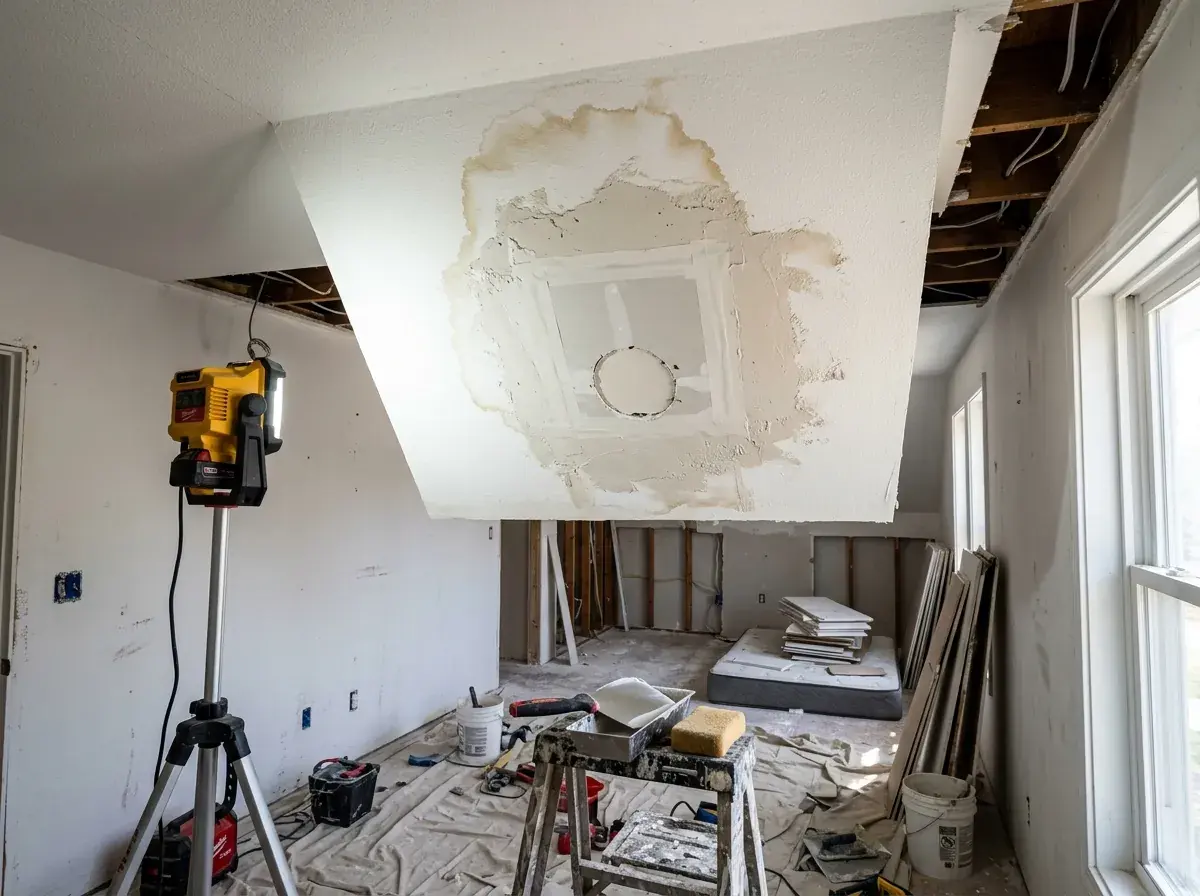
Patching ceiling drywall before a smooth finish in a Charleston, SC home

What popcorn texture has been hiding

Popcorn was sprayed partly to cover rough drywall work, and over 40 or 50 years it has kept covering everything that happened since. An appraiser quoted by HomeLight noted that popcorn may be hiding cracks. In our experience it hides a lot more than that.

When we scrape a ceiling in a 1970s West Ashley ranch or a 1980s Goose Creek two-story, we routinely find nail pops along every joist, tape seams that have let go, patched holes from old light fixtures and brown rings from leaks that were fixed years ago.

None of it is a problem if it is repaired properly before the finish goes on. All of it is a problem if it is skimmed over and ignored.

Common ceiling problems in Lowcountry homes

Moisture drives most of them.

Water stains from roof leaks

Lowcountry roofs take a beating from summer storms and hurricane season. A slow leak around a vent boot or flashing leaves a brown ring on the ceiling long before it drips. We seal and repair the stain after your roofer has fixed the source.

AC condensate and plumbing leaks

Air handlers in attics run hard here, and a clogged condensate line or sweating duct can soak a ceiling from above. Upstairs bathrooms do the same to the ceiling below. Both are common sources of ceiling damage in Summerville and Mount Pleasant two-story homes.

Seam cracks and nail pops

Framing moves with humidity, pulling nails out and opening tape joints. Popcorn hides it. A smooth ceiling does not, so every pop and seam has to be re-anchored and re-taped before the skim coat.

Old patches and fixture holes

Past owners moved lights, removed fans or cut access holes, then textured over a rough patch. We cut those back and redo them so they disappear under the new finish.

How we repair ceiling drywall

Repairs happen between the scrape and the finish, when the drywall is bare and every flaw is visible.

  1. Inspect the bare ceiling

    After popcorn removal we go over the whole surface under raking light and mark every pop, crack, patch and stain.

  2. Check for moisture

    Stained areas get a moisture reading. Damp drywall means an active leak. We stop and tell you so the roofer, plumber or HVAC tech can fix the source before we finish.

  3. Cut out damaged board

    Soft, sagging or moldy drywall is cut back to sound material and replaced with a new piece screwed to the framing.

  4. Re-anchor and re-tape

    Nail pops get a screw beside them. Loose or cracked seams get fresh tape and compound.

  5. Seal stains

    Any remaining discoloration is sealed with a stain-blocking primer so it cannot bleed through the finish.

  6. Skim and finish

    Repairs are feathered into the surrounding ceiling with a skim coat or blended into knockdown texture, then primed and painted.

What we repair and what we refer

We handle the drywall side: patches, seams, nail pops, stains, small sections of replacement board and the finish over all of it. Some things are outside our lane, and we will say so rather than cover them up.

  • Active leaks go to a roofer, plumber or HVAC contractor first. We can recommend the repair, but we will not finish a wet ceiling.
  • Significant mold behind the drywall should be handled by a remediation company before we rebuild the surface.
  • Sagging framing or structural movement needs a contractor or engineer. A crack that is wide, growing or paired with a sloping floor is not a drywall problem.

Small repairs are typically folded into the removal estimate. Larger patches and water-damaged sections are quoted on-site and listed separately on the written estimate. See the cost guide for removal and finish ranges, or request a free quote and mention any stains or cracks you already know about.

Repair without removal

Have a smooth or knockdown ceiling with a stain or crack and no popcorn? We take standalone ceiling repair jobs too, across North Charleston, Hanahan, James Island and the rest of the tri-county area.

Frequently asked questions

Short answers to the questions Charleston homeowners ask most. More on the full FAQ page.

Can you repair a water-stained ceiling without replacing the drywall?

Often yes. If the drywall is dry, firm and not sagging, we seal the stain with a stain-blocking primer, skim any rough spots and paint. If the board is soft, crumbling or bowed, we cut out the damaged section and patch in new drywall. Either way the leak itself has to be fixed first, or the stain will come back.

Why do cracks keep coming back in my ceiling?

Usually because the crack was filled but not taped. Hairline cracks at drywall seams move with seasonal humidity and temperature swings, and plain compound cannot bridge that movement. We re-tape the seam with mesh or paper tape, then skim over it. Cracks that keep reopening in a straight line along a seam are the classic case.

What causes nail pops in Charleston ceilings?

Wood framing shrinks and swells with humidity, which slowly pushes drywall nails out. Popcorn texture hides them for decades; a smooth ceiling shows every one. We drive a screw beside each pop to anchor the board, set the old nail, then fill and skim. It is a standard step in every removal job we do.

Do I need to fix ceiling damage before popcorn removal or after?

After the scrape, before the finish. Scraping exposes problems that were hidden under the texture, so we inspect the bare drywall and make repairs at that stage. Fixing the source of a water leak is the one thing that should happen before we start, since we cannot finish a ceiling that is still getting wet.

How much does ceiling drywall repair cost?

Small repairs like nail pops, seam cracks and minor patches are usually folded into the removal estimate rather than priced separately. Larger patches, sagging sections or water-damaged areas that need new board are quoted on-site based on the size of the repair. We put every repair on the written estimate so there are no surprises.

Ready for smooth, modern ceilings?

Free, no-pressure quotes across the Charleston tri-county area.

Call NowFree Quote